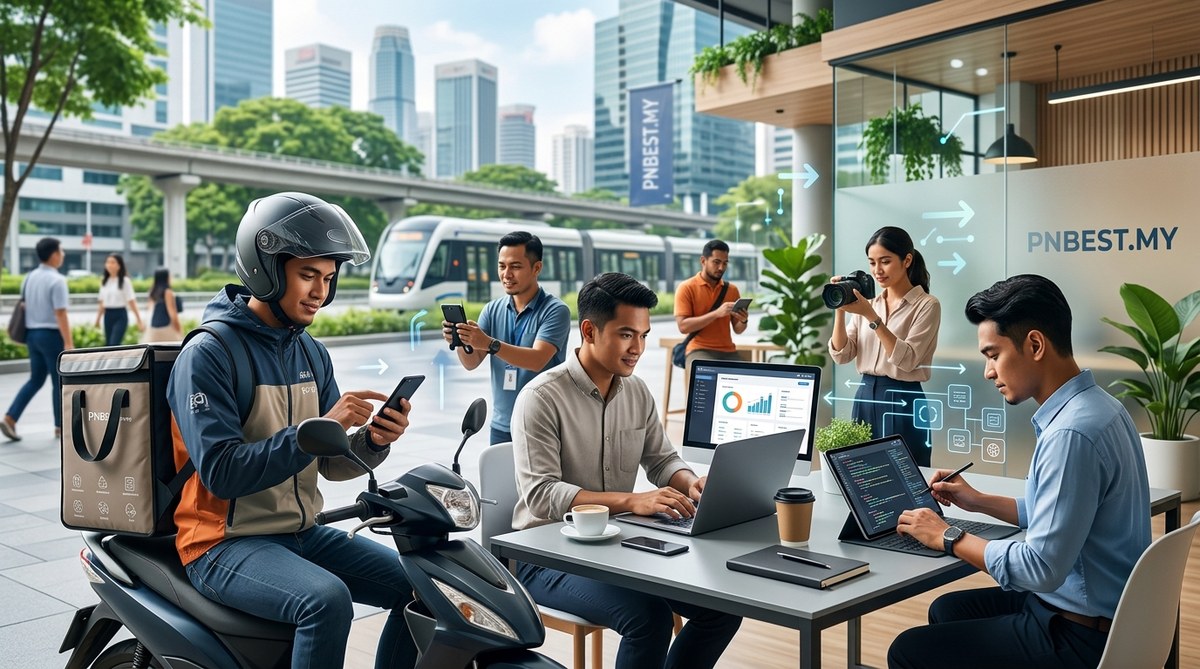
The gig economy is no longer a niche topic tucked away in tech circles. In Malaysia and across Southeast Asia, millions of people have started to rely on flexible, on demand work to make ends meet. From ride hailing and food delivery to freelance micro tasks and on demand creative work, the gig economy has become a central feature of the modern digital labor market. Yet beneath the convenience and speed lies a set of complex questions about income stability, social protection, and the balance of power between workers and the platforms that employ them. At pnbest.my we explore these questions with independent analysis that speaks to politicians, workers, and business leaders alike. This article dives into what the trend means for workers rights and what policies could support fair and secure work in a digital economy.
The rise of the gig economy in Malaysia
The growth of the gig economy in Malaysia has been powered by several converging trends. The first is technology adoption. Widespread smartphone use, data connectivity, and easy access to digital wallets have lowered the barriers to participate in on demand work. The second is urban economic shift. As cities grow and consumer demand for quick services rises, gig workers become the flexible labor backbone for many businesses. The third factor is the business model itself. Platforms designed around independent contractors offer scalability and cost efficiency, while giving workers the promise of flexibility and extra income.
Key drivers include:
– Accessibility of platforms that require low upfront investment
– Availability of flexible hours for students, caregivers, and second earners
– A growing appetite for on demand services among urban consumers
– The allure of “being your own boss” and choosing when to work
For policymakers and analysts, the question is not whether gig work exists, but how to shape a system that preserves opportunity while protecting workers from volatility and risk.
What counts as a gig worker
Understanding who qualifies as a gig worker is essential for designing policy and protections. In essence, gig workers are individuals who perform tasks or services through online platforms on a short term basis, often without a long term employment contract. They typically have:
– Variable workloads that can surge or dip week to week
– Earnings tied to demand, competition, and the platform’s algorithm
– Limited or no access to traditional employment benefits like paid leave, health insurance, or retirement contributions
– A mix of autonomy and control over when and how they work, depending on the platform’s rules and the marketplace dynamics
Common categories include:
– Ride hailing drivers and food delivery couriers
– Freelancers delivering services in areas such as design, writing, programming, or translation
– Micro task workers who complete small online jobs
– On demand professionals who provide specialized services for short engagements
The legal and policy implications hinge on whether gig workers are treated as employees, contractors, or a new hybrid category. The classification matters because it determines eligibility for protections and benefits.
Why gig work feels attractive
Gig work taps into several strengths for workers who seek flexibility and supplementary income. Reasons people choose gig work include:
– Flexible hours and the ability to set personal schedules
– The possibility to earn additional income alongside a primary job or study
– The chance to try different types of work and build new skills
– The opportunity to work from anywhere with an internet connection
For many, gig work is a practical solution that complements their life and goals. However, flexibility is not a substitute for predictable income and social protection.
The flip side: risks and vulnerabilities
Flexibility can be a double edged sword. The same features that make gig work appealing can also create serious vulnerabilities for workers. Common risks include:
– Income volatility and earnings volatility that can spike and then fall without warning
– Absence of traditional employment protections such as paid leave or severance
– Uncertain career progression and limited access to training or advancement
– Dependence on algorithmic management and platform dictated rules
– Limited bargaining power and weak channels for dispute resolution
– Potential privacy concerns from data collection and monitoring by platforms
In practice, many gig workers experience a high degree of income uncertainty, particularly during slow periods or when platform competition intensifies. Without a stable floor, the risk of slipping into poverty or debt increases, especially for those who support families or owe high living costs.
Regulatory landscape and the policy gap
Globally, regulators are still catching up with the scale and complexity of the gig economy. In Malaysia, the current employment framework centres on traditional employer-employee relationships, and gig workers frequently sit outside those protections. This creates a policy gap where essential protections such as income stability, social security, healthcare access, and retirement savings are not automatically available to gig workers.
Important policy questions include:
– How should gig workers be classified for regulatory purposes
– Should there be portable benefits that travel with the worker across platforms
– How can social protection be extended without stifling platform innovation
– What disclosure and transparency rules should platforms follow about earnings, fees, and dispute resolution
– How can workers access training and career development to improve earnings and mobility
Some governments are piloting portable benefits arrangements, mandatory minimum earnings thresholds, and clearer classification rules. Malaysia can learn from regional and international experiences to design a framework that fits local conditions and respects the dynamic nature of platform work.
Best practices from other countries
Looking at examples from other countries can illuminate viable approaches. The following practices have gained attention as part of an emerging toolkit to improve gig worker security without undermining innovation:
– Clear worker classification rules to reduce ambiguity
– Portable or universal access to social protection benefits (healthcare, pensions, unemployment pockets)
– A minimum earnings guideline or earnings floor during peak periods or in high demand sectors
– Transparent platform governance including clear pay formulas, fee disclosures, and dispute resolution channels
– Accessible training and credentialing programs that support career progression
– Inclusive data practices that protect worker privacy and give workers a voice in algorithmic decision making
These measures aim to tackle income volatility, improve safety nets, and ensure that workers can plan for the medium and long term even if they operate on a flexible schedule.
What this means for workers rights
For workers in Malaysia and similar markets, the central implication is that rights and protections should adapt to the realities of digital labor. This does not mean a full return to traditional employment, but rather a hybrid approach that preserves flexibility while ensuring basic protections. Key considerations include:
– Fair compensation that reflects the cost of living and the value of the work
– Access to health care, injury protection, and social security regardless of employment status
– Transparent earnings information and stable payment practices
– A credible grievance mechanism and clear channel to address platform disputes
– Opportunities for skill development and career mobility within and across platforms
The overarching aim is to tilt power dynamics toward fairness, reduce income precarity, and enable workers to make informed choices about how and when they work.
How platforms respond and why it matters
Platforms play a central role in shaping the gig economy. Their practices affect earnings, job quality, and the overall health of the labor market. Responsible platform behavior includes:
– Transparent pricing and fee structures that show how workers are paid
– Clear terms that are easy to understand and accessible to all workers
– Fair and timely payment schedules with grievance options when disputes arise
– Algorithm accountability that reduces opaque decisions impacting work allocation or ratings
– Investment in worker training, safety resources, and community support
Platform governance is not just about compliance. It is about building trust with workers and consumers, and creating a sustainable model that supports growth without sacrificing worker welfare.
The role of labor unions and collective bargaining
Collective action remains a powerful tool for improving rights in the gig economy. Where traditional unions face challenges in organizing a dispersed and independent workforce, new forms of worker representation are emerging. These include:
– Freelancers advocacy groups that coordinate across platforms
– Sector specific coalitions that support workers in ridesharing, delivery, or content creation
– Multi platform associations that negotiate for portable benefits and income protections
– Solidarity networks that provide information, training, and access to legal resources
Unions and worker associations can help negotiates for fair pay, social protections, and reasonable working conditions, while preserving the flexibility that many gig workers value.
Policy recommendations for Malaysia
To help ensure that the gig economy grows in a way that benefits workers, policymakers could consider a practical mix of rules and programs. Here are some concrete options that balance flexibility with protection:
1. Clarify worker classification: Establish a clear, criteria based framework to determine when a worker is an employee or an independent contractor for regulatory purposes.
2. Portable benefits system: Create a portable benefits model that allows workers to accumulate health insurance, unemployment protection, and retirement contributions across platforms.
3. Implement a minimum earnings floor during peak hours: Consider a base earnings guarantee or a guaranteed minimum wage for hours where demand is highest, with differences by sector.
4. Social protection expansion: Extend access to healthcare and pension programs to gig workers through affordable contributions and employer shared costs where feasible.
5. Income smoothing mechanisms: Explore gig specific savings tools and emergency funds that help workers bridge gaps between gigs.
6. Data privacy and algorithm transparency: Require platforms to disclose key algorithmic rules related to task allocation, search results, and ratings while protecting worker privacy.
7. Training and career progression: Fund and promote accessible training programs that help gig workers upskill and move to higher value tasks or other career paths.
8. Transparent dispute resolution: Establish accessible, fair channels for workers to challenge decisions, with quick timelines and predictable outcomes.
9. Encourage platform diversity: Support multiple platforms within sectors to reduce dependence on a single employer and to maintain pricing and service quality.
10. Public awareness and guidance: Provide resources and guidance on best practices for workers to manage finances, taxes, and rights in the gig economy.
These recommendations are designed to be practical and adaptable to Malaysia unique regulatory environment, while remaining sensitive to the need for innovation and job creation in a digital era.
For workers on the ground: actionable tips
If you are currently participating in the gig economy, here are practical steps you can take to protect yourself while maximizing opportunities:
– Diversify platforms: Don’t rely on a single platform. Sign up for multiple platforms to stabilize earnings and reduce downtime.
– Track your earnings and expenses: Keep a simple ledger of gigs, hours worked, and costs such as fuel, data, and maintenance.
– Create a budget buffer: Aim to save a portion of earnings during busy periods to cover lean times.
– Build marketable skills: Invest time in training that expands your ability to do higher value work, such as digital marketing, graphic design, or software development.
– Protect your health and safety: Use personal protective equipment as required, and maintain clear safety guidelines for all gigs.
– Keep records: Save screenshots of earnings, timings, and platform communications to resolve disputes efficiently.
– Understand tax obligations: Stay informed about tax requirements for gig income and use available reliefs or simplified tax regimes when applicable.
– Network and advocate: Connect with other gig workers to share insights and push for fair policies and protections.
Case studies and regional insights
Across neighboring markets, entrepreneurs, workers, and policymakers are experimenting with portable benefits, clear classification rules, and stronger safety nets for gig workers. For example:
– A city led pilot program that offers health coverage for platform workers through a shared fund financed by workers, platforms, and government contributions.
– A sector wide association that negotiates for fair pay, predictable schedules, and better dispute resolution across multiple gig platforms.
– A digital literacy campaign that helps gig workers upgrade practical skills aligned with the needs of growing industries such as e commerce, logistics, and software services.
These examples highlight a broader trend: the gig economy is not just about individual marketplaces, but about building an ecosystem that recognizes gig work as legitimate labor and provides pathways to stability and growth.
The future: trends to watch
Looking ahead, several developments are likely to shape gig work in Malaysia and the region:
– Algorithmic transparency and worker voice: Workers will demand clarity about how tasks are allocated, how ratings are calculated, and how changes impact earnings.
– Multi platform labor markets: Workers will increasingly operate across several platforms to optimize earnings and compensation.
– AI assisted work: Artificial intelligence may handle routine tasks, leaving workers with higher skilled, creative, or problem solving work but also requiring updated skills.
– Financial protections and tax alignment: Governments and platforms will implement more robust financial protections, pensions, and tax compliance support.
– Regional frameworks: Southeast Asia could see regional policy cooperation on portable benefits and social protection that benefit gig workers across borders.
Conclusion: balancing opportunity with protection
The rise of the gig economy offers real opportunities for flexibility, entrepreneurship, and income supplementation. It also presents serious challenges in terms of income stability, social protection, and power imbalances. For Malaysia, the path forward lies in pragmatic policy design that preserves the benefits of platform based work while closing gaps in protection and security for workers. By clarifying classifications, expanding portable benefits, and encouraging fair platform governance, policymakers can help ensure that the gig economy contributes to inclusive growth rather than increasing inequality.
At pnbest.my we will continue to examine the evolving landscape of digital economy and labor rights. As the conversation advances, it will be critical to keep workers at the center of policy design and to involve unions, platform leaders, businesses, and the public in constructive dialogue. If you are a reader who wants to stay informed about the latest trends in economics digital and labor rights, subscribe to our updates and join the discussion. Together, we can shape a gig economy that is not only innovative and dynamic but also fair and secure for every worker who chooses to participate.